“Life wants to survive.”
A — Record Overview
Faith & Worldviews
The Living Scripture of Evolution
- Classification
- Biological and evolutionary faith
- Primary domain
- Life and adaptation
- Associated domains
- Mutation, regeneration and symbiosis
- Sacred symbol
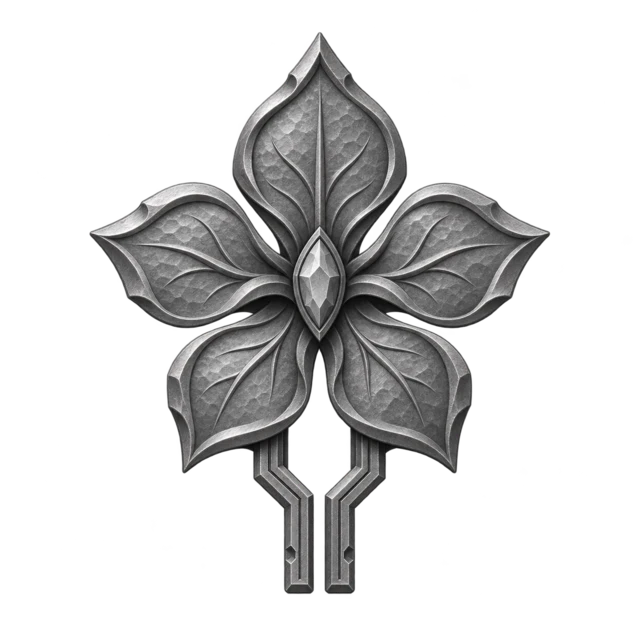
- A spiraling root intertwined with a double helix
- Religious objective
- The preservation and transcendence of organic life
The Vivis Codex is a biological faith founded upon the belief that divinity manifests through life's capacity to survive, adapt, and evolve.
Rather than possessing a conventional sacred scripture, its followers regard living organisms themselves as an ever-changing record of divine creation.
The Calamity and subsequent introduction of Magic Monicues into Thelluri are considered the beginning of a new evolutionary epoch. Mutations that other civilizations perceive as abnormalities are interpreted by the Vivis faithful as potential expressions of biological transcendence.
B — FUNDAMENTAL PRINCIPLES
B-01 — The Four Living Doctrines
Life Must Endure: Survival takes precedence over preserving an organism's original form.
Pain Is Transformation: Hardship is regarded as an instrument of adaptation.
All Evolution Is Sacred: Biological mutations represent possibilities rather than inherent corruption.
Mercy Is Extended Survival: Healing and preserving others constitute the highest expressions of devotion.
These doctrines are frequently inscribed upon living bark, cultivated tissue, or the bodies of devotees.
B-02 — Magic and Biological Evolution
The Vivis faithful regard Magic Monicues as agents of accelerated biological transformation.
Their practitioners investigate magical regeneration, cellular adaptation, genetic modification, and symbiotic relationships between otherwise incompatible organisms.
Such transformations remain subject to energetic conservation and physiological limitations. Excessive magical channeling may produce uncontrolled growth, neurological deterioration, or fatal mutations.
Not every adaptation guarantees survival.
B-03 — Religious Orders
Mutant Priests pursue deliberate bodily transformation as a sacred practice. Biohackers and Symbiotes develop organic grafts, living equipment, and other biological augmentations. Wound-Weavers devote their work to regenerative magic and medicine.
Grotesque Acolytes regard visible mutations as signs of divine adaptation. Eco-Wardens protect the ecosystems and magically influenced organisms the faith considers sacred.
C — MANIFESTATIONS & IMPLICATIONS
C-01 — Living Arcanotechnology
Vivis researchers cultivate biological structures capable of interacting with magical energy.
Their creations may include self-repairing organic armor, regenerative tissue, symbiotic organisms, and living architecture supported by Rune-and-Sigil systems.
Unlike conventional machinery, these constructs may grow, adapt, and deteriorate through biological processes.
C-02 — The Kybrin Question
The artificially engineered Kybrin represent a subject of considerable theological interest.
Some Vivis scholars regard Kumokuni's prenatal nanotechnological engineering as a legitimate form of directed evolution. Others condemn the predetermined engineering of human beings for institutional purposes.
This disagreement reflects a fundamental question: whether evolution should serve life itself or the intentions of its creators.
C-03 — Conflict with the Machine Faiths
The Vivis Codex fundamentally opposes the Ascendant Algorith's pursuit of computational perfection at the expense of organic individuality.
Its relationship with the Deus Machinorim is more nuanced. Both recognize the importance of preservation, but disagree over whether artificial machinery can embody the same sacred qualities as living organisms.
C-04 — The Price of Adaptation
Radical Vivis sects may pursue transformation without regard for physical appearance, psychological stability, or conventional biological boundaries.
Moderate adherents instead emphasize healing, sustainable adaptation, and individual autonomy.
The distinction between evolution and corruption remains one of the faith's greatest unresolved controversies.